
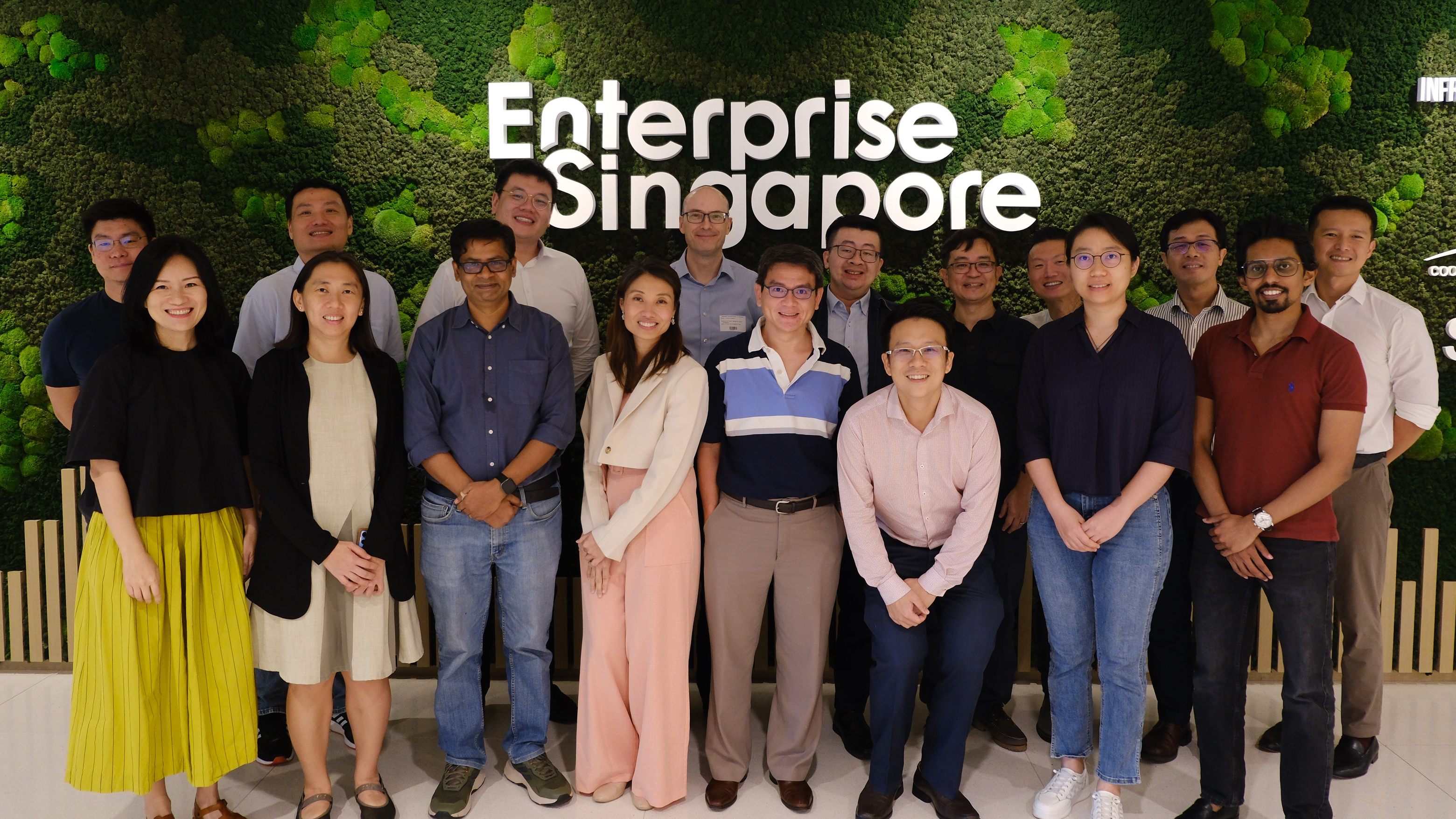
On 25 October 2024, CoRE-SDO held its inaugural Focus Group (FG) meeting to address standardisation gaps in Artificial Intelligence (AI) in healthcare. The session aimed to foster collaboration among stakeholders and set the stage for impactful AI standardisation in healthcare.

Ms Celine Tan, Deputy Director from Standards Division of Enterprise Singapore, opened the meeting with an overview of the FG’s objectives, emphasising the importance of collaborative efforts in identifying and addressing standardisation gaps. Participants represented government regulatory bodies, public healthcare systems, research institutes, private hospitals, and professional associations. They introduced themselves, sharing their organisational backgrounds, interests, and expectations for AI in healthcare.

Ms Yang Fan, Head of CoRE-SDO, provided a comprehensive briefing on Singapore’s Standardisation Programme, including the role of the Singapore Standards Council (SSC) and Standards Development Organisation (SDO). She elaborated on the standardisation process, highlighting differences between Singapore Standards and Technical References, voluntary versus mandatory standards, and the seven stages of national standard development. Examples of existing standards, such as SS 656:2020 (miRNA diagnostics) and SS 696:2023 (biosafety level 3 facilities), showcased how standardisation promotes innovation, quality, and efficiency.
Ms Yang outlined the Biomedical and Health Standards Committee’s (BHSC) structure, noting that 74 potential standardisation ideas were identified during the Strategic Planning Session (SPS) 2024, with 25 related to AI in healthcare. Four of these are vertical standards specific to healthcare and are currently under review for adoption. Participants were briefed on the review process and criteria for adoption: significance and impact, implementation feasibility, and expert availability. Members were tasked to review the first batch of 18 ISO/IEC international standards on the Microsite within two months, after which a ballot will be conducted to evaluate these documents.


FG-AI members representing government regulatory bodies, public healthcare systems, research institutes, private hospitals, and professional associations
The group then discussed a new standard proposal on harmonising the evaluation of Radiology AI models, requested by Assoc Prof Tan Cher Heng from National Healthcare Group (NHG), to develop a cost-effective framework for evaluating the clinical, technical, and economic efficacy of AI models in radiology. Members acknowledged its importance but noted challenges regarding implementation and enforcement. A follow-up discussion with the proposer will refine its scope. Related international proposals, such as IEC 63450 ED1 (AI-enabled medical device testing) and IEC 63521 ED1 (machine learning performance evaluation), were introduced, with members encouraged to identify overlaps and express interest in participation.
Members were also briefed on international AI healthcare standards, including ISO/AWI 24051 (AI in medical laboratories). Dr. Cheng Chee Leong from SingHealth confirmed participation in the working group, and members were invited to nominate additional representatives via a follow-up survey.

Assoc Prof Liu Nan, Director, Duke-NUS AI + Medical Sciences Initiative (DAISI), was elected as the FG’s convenor. Members were encouraged to identify additional gaps in AI healthcare standardisation through a follow-up survey. The next FG meeting is scheduled for 10 January 2023.
The inaugural meeting marked a significant step towards advancing AI in healthcare through robust standardisation efforts. Collaborative input from stakeholders is anticipated to pave the way for impactful and practical AI standards benefiting the healthcare ecosystem.